
On July 5, 2026, the Raphael Lemkin Society took part in an event in The Hague held as part of the Parliamentary Support Team for Ukraine, a special format of the OSCE Parliamentary Assembly established to coordinate practical and political support for Ukraine.
The Society was represented by its Executive Director, Anastasiia Oleksii, and Chair of the Board, Vitaliy Tytych.
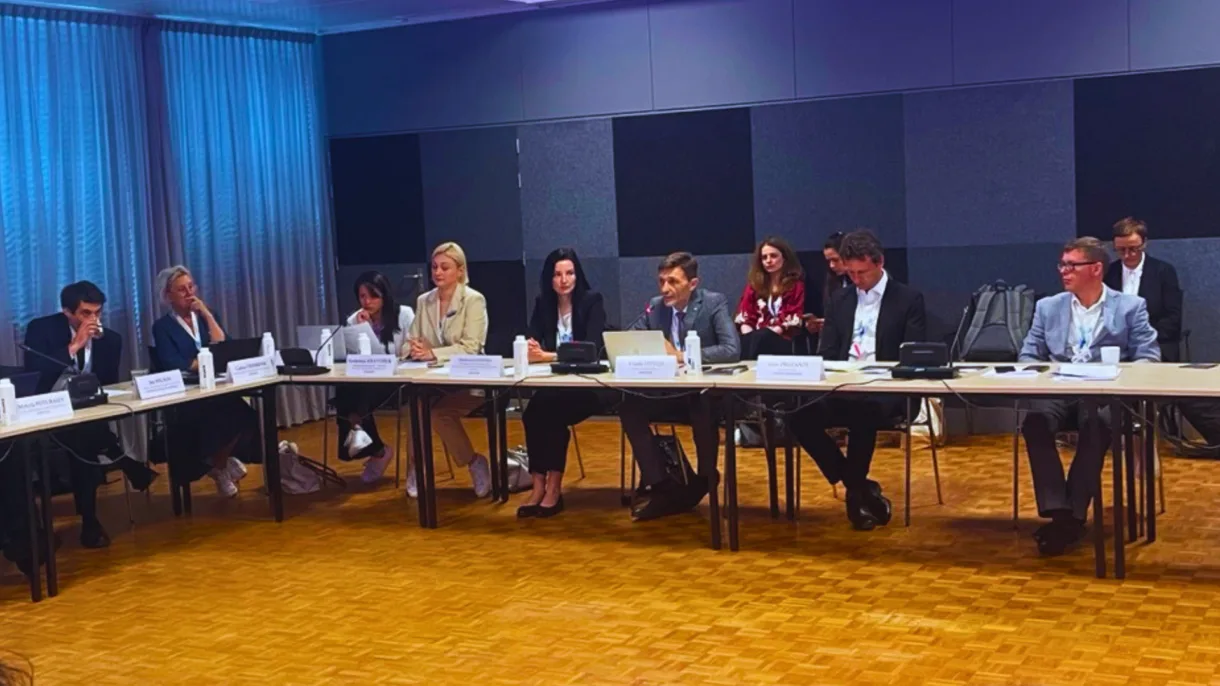
As part of the thematic discussion “War crimes, crimes against humanity and crimes of
genocide committed by the Russian Federation,” Vitaliy Tytych delivered a speech on the need to criminalize systematic crimes against culture as a manifestation of genocidal policy.
“What we are witnessing is more than physical violence against people – it is a systematic attack on Ukrainian identity itself: museums and archives destroyed, heritage demolished, artefacts looted, curricula rewritten, the language forced out of public life, and children made to adopt a different history and a different loyalty,” — Vitaliy Tytych said in his speech.
He emphasized that the destruction of the cultural, linguistic, educational, and institutional foundations of the Ukrainian people’s existence cannot be viewed merely as a collection of separate war crimes. Rather, it is a coordinated policy aimed at erasing Ukrainian identity and denying Ukraine’s very existence as a distinct nation.
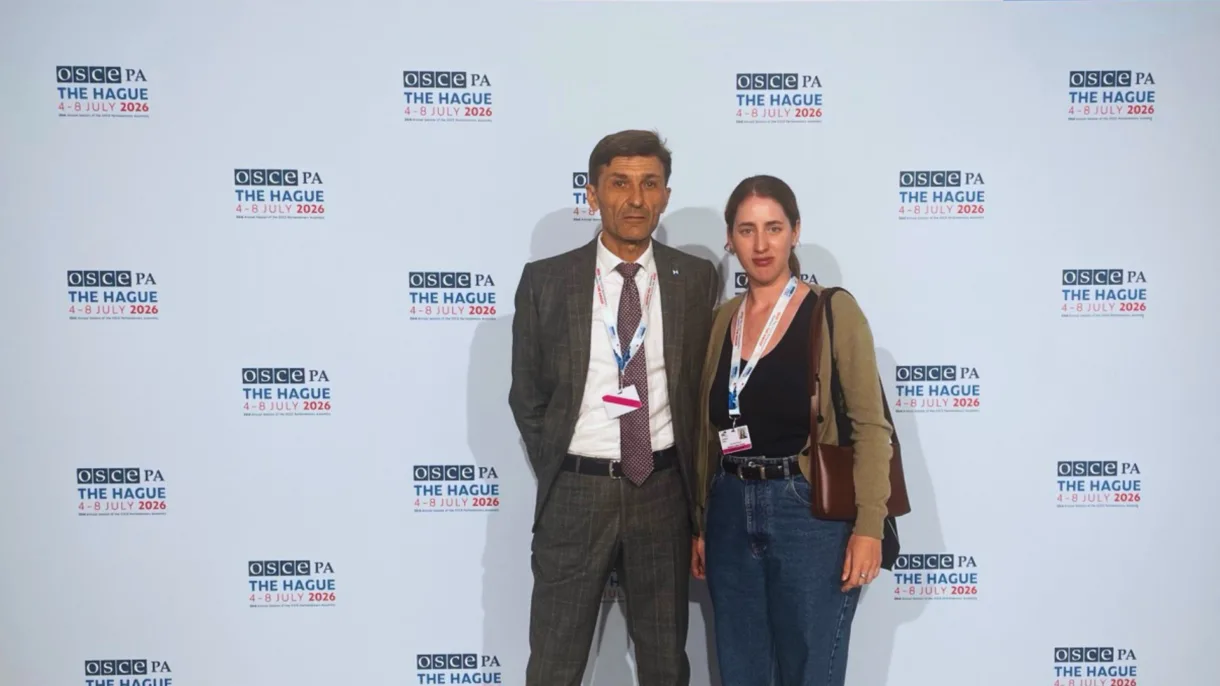
Vitaliy also recalled the origins of the concept of “genocide.” Raphael Lemkin, who coined the term, understood genocide not only as the physical destruction of people, but also as the destruction of the foundations of a group’s existence: its culture, language, institutions, and collective memory. This broader understanding was reflected in United Nations General Assembly Resolution 96(I) of 1946. However, the concept of cultural genocide was later removed from the 1948 Convention on the Prevention and Punishment of the Crime of Genocide.
In his remarks, Vitaliy paid particular attention to the link between accountability for crimes against identity and broader security concerns. He emphasized that the law must be able not only to document individual criminal acts, but also to recognize the campaign behind them.
“War crimes tell us what happened; genocide tells us why. If international law can recognise the destruction of people, but not the destruction of the identity that makes them a people, then our understanding of genocide remains incomplete,” Vitaliy Tytych emphasized.
In addition to Vitaliy Tytych, the discussion brought together representatives of Ukrainian state institutions, local authorities, civil society, and the international legal community:
- H.E. Dmytro Ponomarenko, Ambassador-at-Large for Prisoners of War, Civilians Deprived of Liberty, and Missing Persons at the Ministry of Foreign Affairs of Ukraine;
- Dmytro Orlov, Mayor of Enerhodar;
- Chrystyna Levchenko, Chair of the Youth Organization of the Nuclear Trade Union and former employee of the Zaporizhzhia Nuclear Power Plant;
- Olga Sagaidak, Chair of the Board of the Coalition of Cultural Actors, Institutional Development and Cultural Institutions Reform;
- Alex Prezanti, international lawyer and international legal adviser at the Partnership Fund for a Resilient Ukraine, United Kingdom;
- Yevheniia Kravchuk, Rapporteur of the Parliamentary Assembly of the Council of Europe resolution “Countering the Erasure of Cultural Identity in War and Peace,” who delivered the concluding remarks.
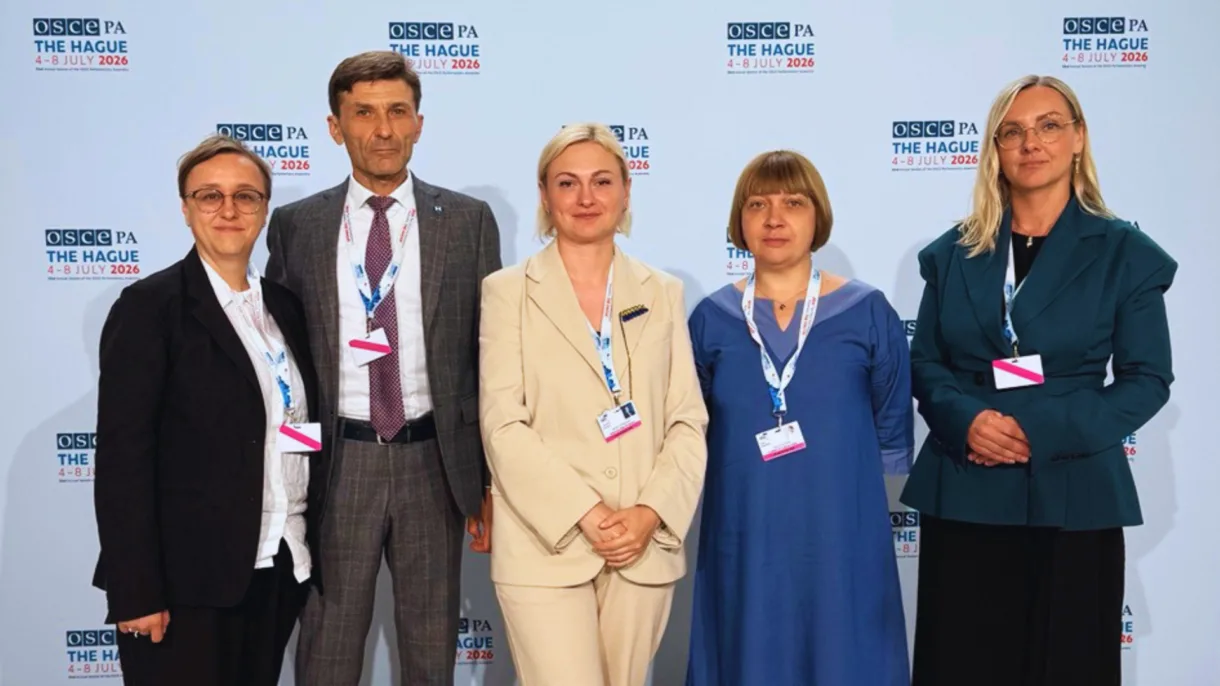
The Raphael Lemkin Society continues to work to ensure that crimes aimed at destroying Ukrainian identity receive proper legal assessment. The Society’s participation in the discussion in The Hague marked another step in advancing international dialogue on the need to rethink approaches to genocide, accountability, and the prevention of future crimes.