
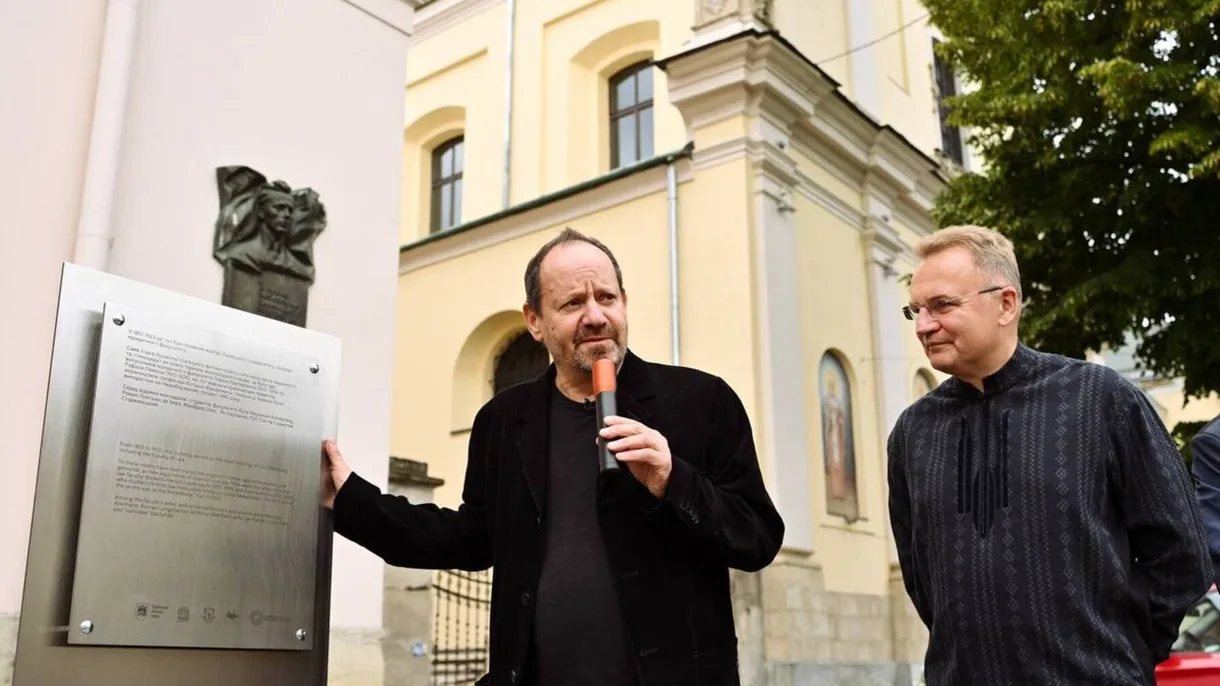
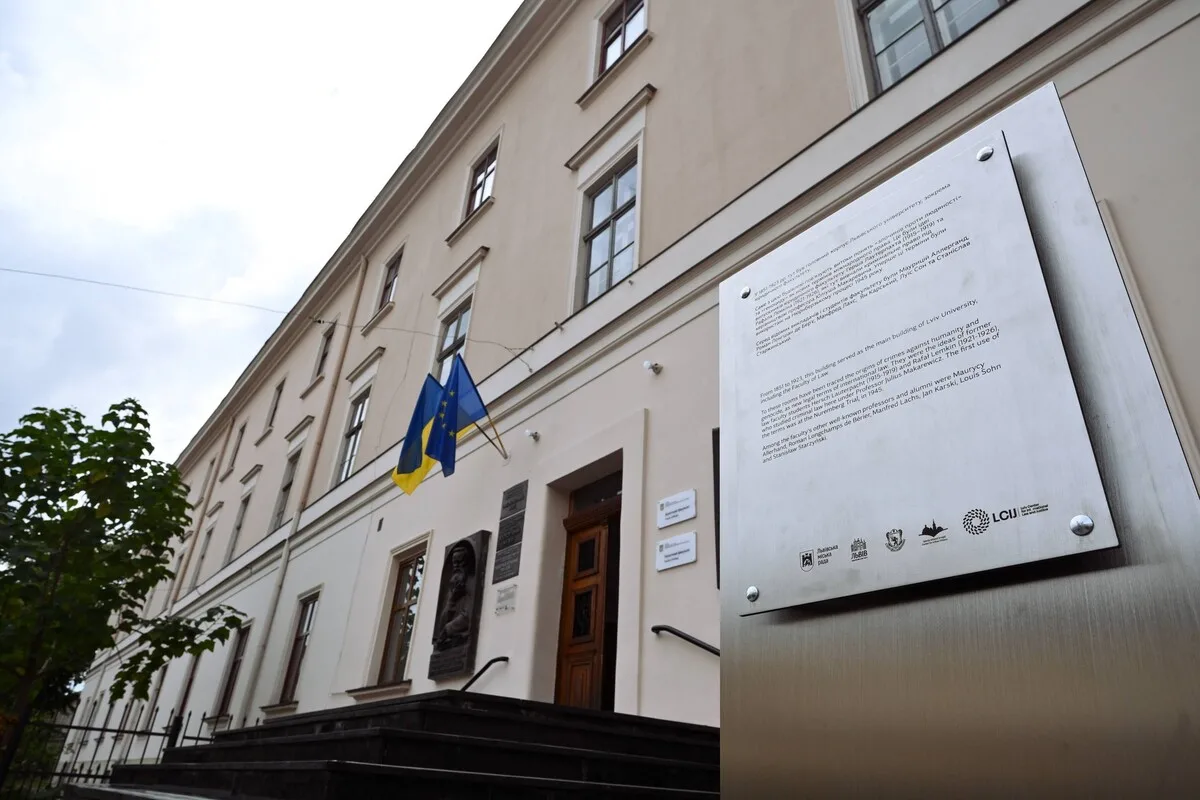
On September 13, 2026, Lviv unveiled a memorial plaque at 4 Hrushevskoho Street honoring the Lviv School of International Law and prominent legal scholars associated with the city. The plaque commemorates Raphael Lemkin and Hersch Lauterpacht, whose ideas played a defining role in the development of modern international criminal law. The Lviv City Council announced the unveiling.
From 1851 to 1923, this building housed the law faculty of Lviv University. Both Lemkin and Lauterpacht studied here and later developed two legal concepts that fundamentally reshaped how international law addresses the gravest crimes.
Raphael Lemkin coined the term “genocide” and devoted much of his life to securing international recognition of the destruction of national, ethnic, racial, and religious groups as a distinct crime. His years of advocacy played a key role in the UN General Assembly’s adoption of the Convention on the Prevention and Punishment of the Crime of Genocide in 1948.
Hersch Lauterpacht was one of the leading legal scholars who helped develop the concept of crimes against humanity and advance the idea of protecting fundamental individual rights under international law.
The memorial plaque also honors Maurycy Allerhand, Roman Longchamps de Bérier, Manfred Lachs, Jan Karski, Louis B. Sohn, and Stanisław Starzyński.
The unveiling ceremony was attended by international lawyer and author Philippe Sands, a professor of law at University College London and the author of East West Street: On the Origins of Genocide and Crimes Against Humanity. In his book, Sands traces the intertwined stories of Lemkin and Lauterpacht, their connections to Lviv, and the origins of the legal concepts of genocide and crimes against humanity.
During the ceremony, Philippe Sands drew a direct connection between the history of the Lviv School of International Law and Ukraine’s struggle today.
“Both military personnel and civilians are fighting for what matters to all of us: human rights, the rights of communities, and the inviolability of the principle prohibiting the use of force in international relations,” Philippe Sands emphasized.
According to Sands, the significance of this struggle extends far beyond Ukraine:
“Ukraine’s struggle is a struggle for the principles and values of all humanity. The world should remain forever grateful to you for these daily sacrifices.”
The ceremony was also attended by Lviv Mayor Andriy Sadovyi, First Deputy Mayor Andriy Moskalenko, First Vice-Rector of Ivan Franko National University of Lviv Andriy Hukaliuk, as well as representatives of the university community, civil society organizations, and the clergy.
Raphael Lemkin in Lviv’s Public Space
The current commemoration is part of a broader effort to restore Raphael Lemkin’s place in Lviv’s public memory.
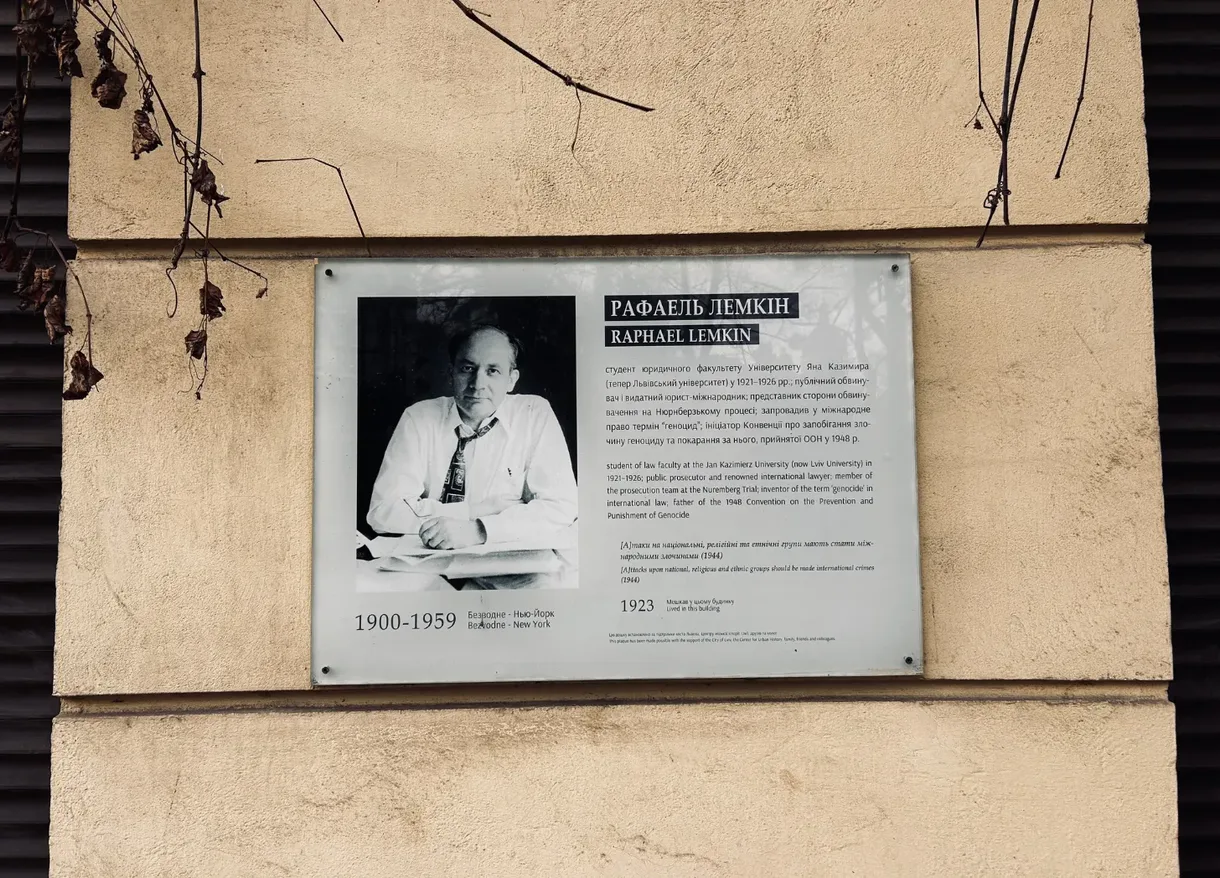
In November 2017, a memorial plaque honoring Lemkin was installed on the facade of the building at 21 Zamarstynivska Street, where he lived while studying in Lviv. Lemkin came to the city in 1921 to pursue a legal education at Lviv University. It was during this period that he began developing his ideas about accountability for the mass destruction of peoples and nations, ideas that would later evolve into his concept of genocide.

In December 2024, the Lviv City Council renamed nearby Malynova Street in his honor. Now known as Raphael Lemkin Street, it is located in the same neighborhood where Lemkin once lived, further strengthening his connection to Lviv’s public landscape.
The unveiling of the new memorial plaque on Hrushevskoho Street adds another chapter to this history and highlights Lviv’s contribution to the development of modern international legal thought. The issues addressed by Lemkin and other representatives of this legal tradition, including the protection of cultural heritage as part of genocide prevention, accountability for international crimes, and the preservation of the international legal order, remain highly relevant today.