
On June 17, 2026, the Center for Civil Liberties, together with the Center for Environmental Initiatives Ecoaction, the Coalition of Culture Actors, and the Raphael Lemkin Society, held a Human Rights Club meeting titled “War, Cultural Heritage, the Environment, and Human Rights: Shared Challenges and Advocacy Opportunities.”
The event brought together representatives of human rights, environmental, cultural, and research organizations to discuss the connections between human rights violations, the destruction of cultural heritage, and environmental damage caused by Russian aggression, as well as to identify shared approaches to documenting these crimes and advancing international advocacy.
Daryna Pidhorna, legal expert and analyst at the Raphael Lemkin Society; Kateryna Honcharova, Regional Director of the World Monuments Fund (WMF) in Ukraine and member of the Coalition of Culture Actors; Oleksiy Pasyuk, Executive Director of Ecoaction; Yelyzaveta Temchenko, expert in the nature conservation department of the Ukrainian Nature Conservation Group; and Volodymyr Hryshko, Senior Legal Advisor at Truth Hounds, joined the discussion as speakers.
Sasha Romantsova, Executive Director of the Center for Civil Liberties, moderated the meeting.
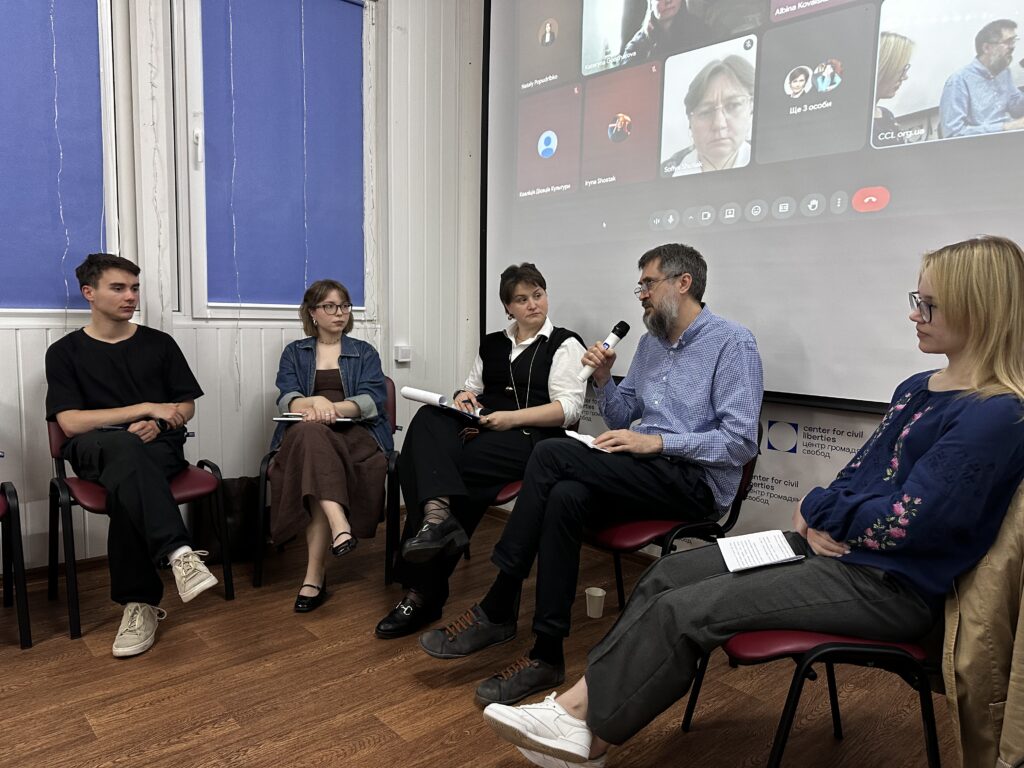
Participants discussed how the consequences of Russian aggression affect people, the environment, and cultural heritage simultaneously, and explored shared approaches to documenting these crimes and advancing justice.
Can the destruction of the Kakhovka Hydroelectric Power Plant, the damage to historic monuments, and human rights violations be treated as separate consequences of the war? Participants in the latest Human Rights Club meeting concluded that they cannot. Despite different approaches to documentation and advocacy, these harms form part of a broader picture: the systematic destruction of the environment in which Ukrainian society exists.
During the discussion, participants emphasized that the destruction of cultural heritage means far more than damage to individual buildings or monuments. These attacks also weaken community ties, erase places of memory, and disrupt cultural continuity. Environmental damage, too, extends beyond harm to nature: it directly affects people’s safety, health, economic opportunities, and quality of life.
Participants also focused on how international law responds to these crimes. Are existing mechanisms sufficient to assess the complex harm caused by war? How can organizations document these crimes so they are not treated in isolation? And how can the human rights, environmental, and cultural dimensions of accountability be connected?
Participants noted that different organizations often work on the same events but view them through different professional lenses. What environmental experts identify as a crime against the environment may also constitute a violation of fundamental human rights for human rights defenders and, for cultural heritage professionals, the destruction of spaces that shape community identity. This makes cross-sector cooperation especially important.
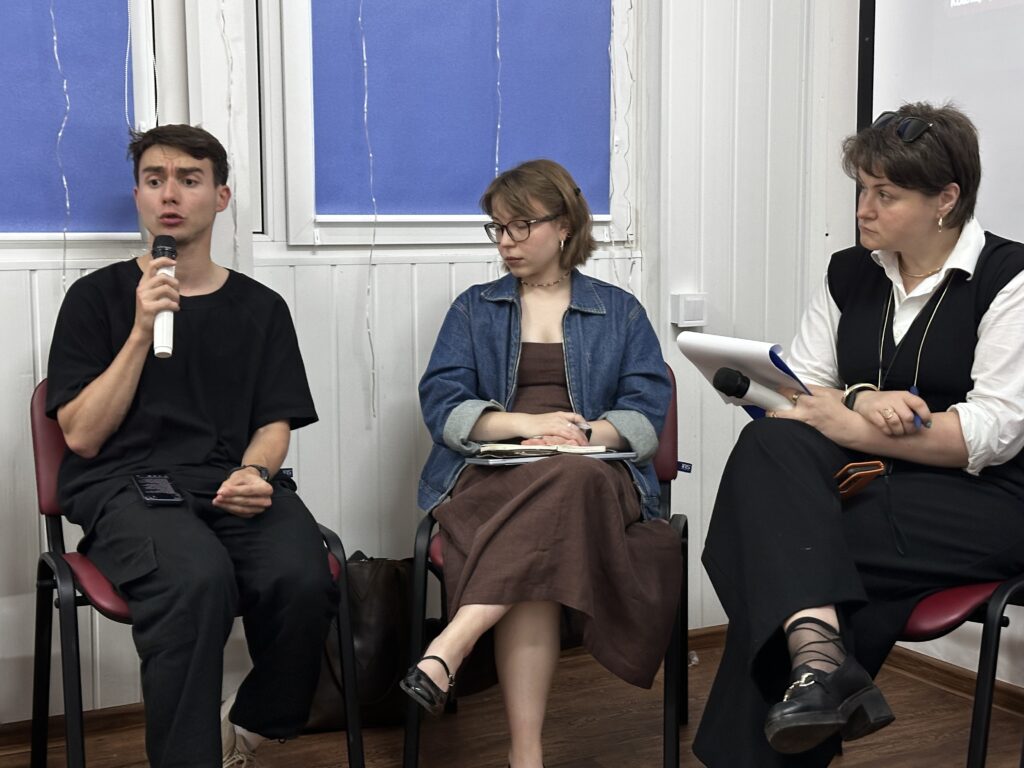
During the discussion, participants proposed creating a shared space to exchange information and expertise, preparing interdisciplinary analytical materials, documenting complex cases at the intersection of human rights, culture, and the environment, and engaging the academic community more actively in researching these issues.
Participants also discussed opportunities for international advocacy. They emphasized the need not only to use existing accountability mechanisms, but also to develop shared messages for international partners that explain the consequences of Russian aggression as an interconnected system of destruction, not a series of separate crimes.
One key outcome of the meeting was a shared understanding that effective documentation and advocacy require closer cross-sector cooperation. Organizations are now developing new approaches to assessing the consequences of war and advancing justice and remedies at the intersection of human rights, environmental protection, and cultural heritage preservation.
The Human Rights Club will continue to create space for interdisciplinary conversations and shared solutions to the challenges Ukrainian society faces during the war.
Event summary and photos courtesy of the Center for Civil Liberties.